Introduction: Why a live vendor-domain catalog matters in WMS selection
Choosing a warehouse management system (WMS) is more than a feature checklist. It is about aligning operational realities with technology that can scale, integrate, and deliver measurable value over time. Buyers frequently surface a collection of vendor pages, one-off case studies, and scattered reviews, which can yield an incomplete or biased view. A practical antidote is to build a live vendor-domain catalog - a corralling of the official domains that host product pages, deployment options, pricing, and corroborating third‑party signals. Framing vendor information as a live inventory - much like a warehouse tracks real-time stock - helps teams monitor changes, compare apples to apples, and shorten time to value.
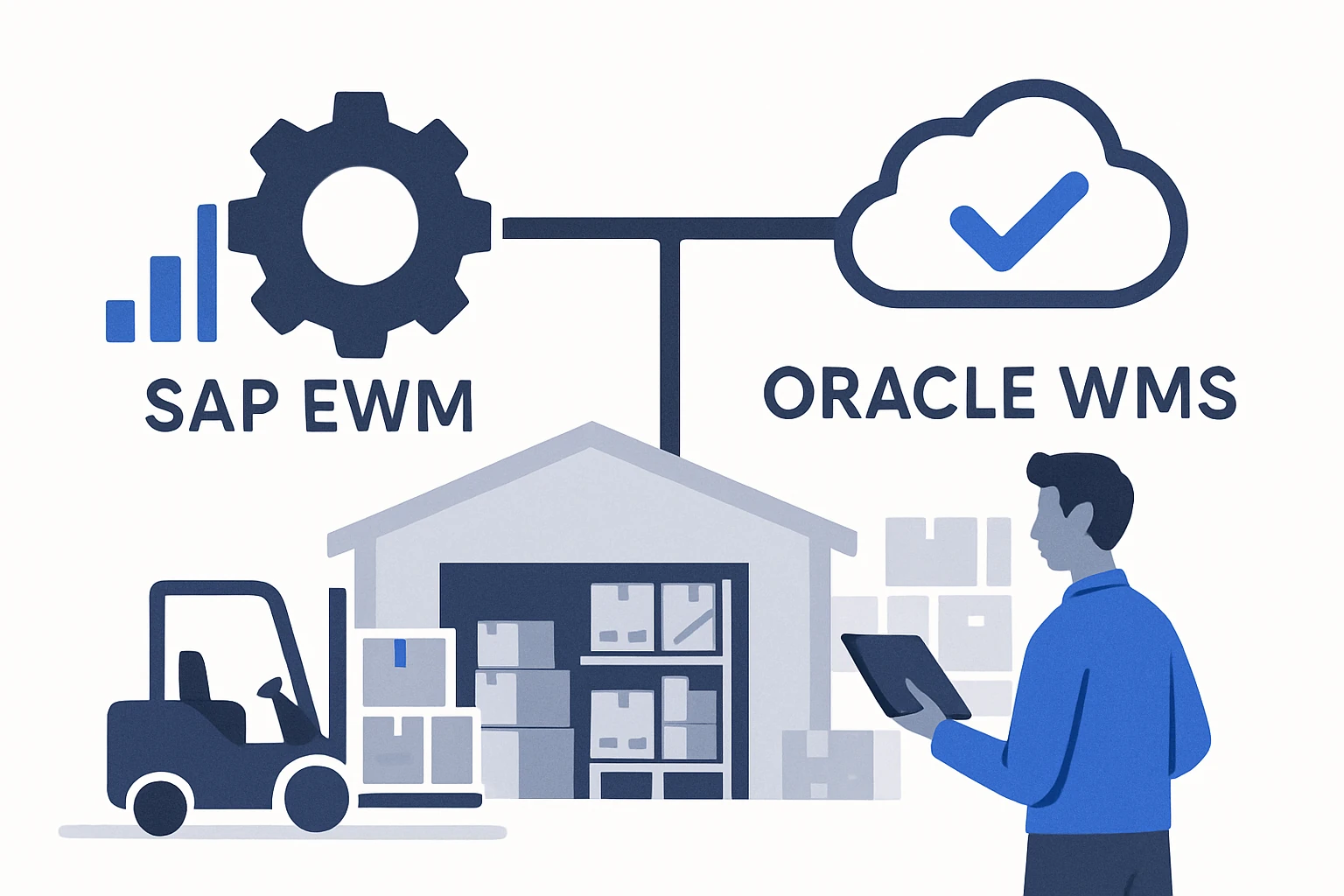
In the WMS space, strategic selection is increasingly guided by broader market dynamics described in industry analyses. For example, Gartner’s Magic Quadrant for Warehouse Management Systems (WMS) has long influenced buyer expectations, highlighting the divide between core WMS functions and extended WMS capabilities, as well as the importance of cloud-first architectures and composable strategies. SAP EWM, Oracle WMS Cloud, and other leaders are frequently cited in MQ discussions as benchmark references for capability breadth and execution. 1 These external signals provide a compass for what good looks like in the category today.
In short, a live-domain approach helps you anchor your evaluation in verifiable, up-to-date sources while keeping the decision process anchored to your warehouse realities. External references are helpful, but your catalog should be actionable - able to surface the exact vendor domains you will visit during due diligence, pricing checks, and reference calls.
Framing the topic with credible context: MQ, cloud, and the evolving WMS landscape
Two core themes recur in modern WMS discussions: (1) the growing importance of extended WMS capabilities that go beyond basic receiving, put-away, picking, and shipping, and (2) the shift toward cloud-native solutions that promise faster time-to-value and scalable deployments. SAP positions EWM as a modern, flexible WMS designed for high-volume, automated environments, with benefits like deep integration with other SAP solutions and support for intelligent slotting. SAP EWM emphasizes visibility, control, and automation as core differentiators.
Oracle describes its WMS Cloud as a cloud-first offering that aims to reduce total cost of ownership while enabling multi-channel fulfillment, yard management, and workforce management in a unified experience. Oracle Warehouse Management Cloud presents a modern, browser-based interface with strong analytics and scalability.
Independent industry analyses, such as Solutions Review's summary of the 2024 Gartner MQ, frame WMS providers through the lens of market momentum, horizontal and vertical strengths, and the emergence of multi-vendor ecosystems. This context matters when you map live domains to capabilities that matter to your operation.
A practical framework: how to build a vendor-domain catalog for WMS selection
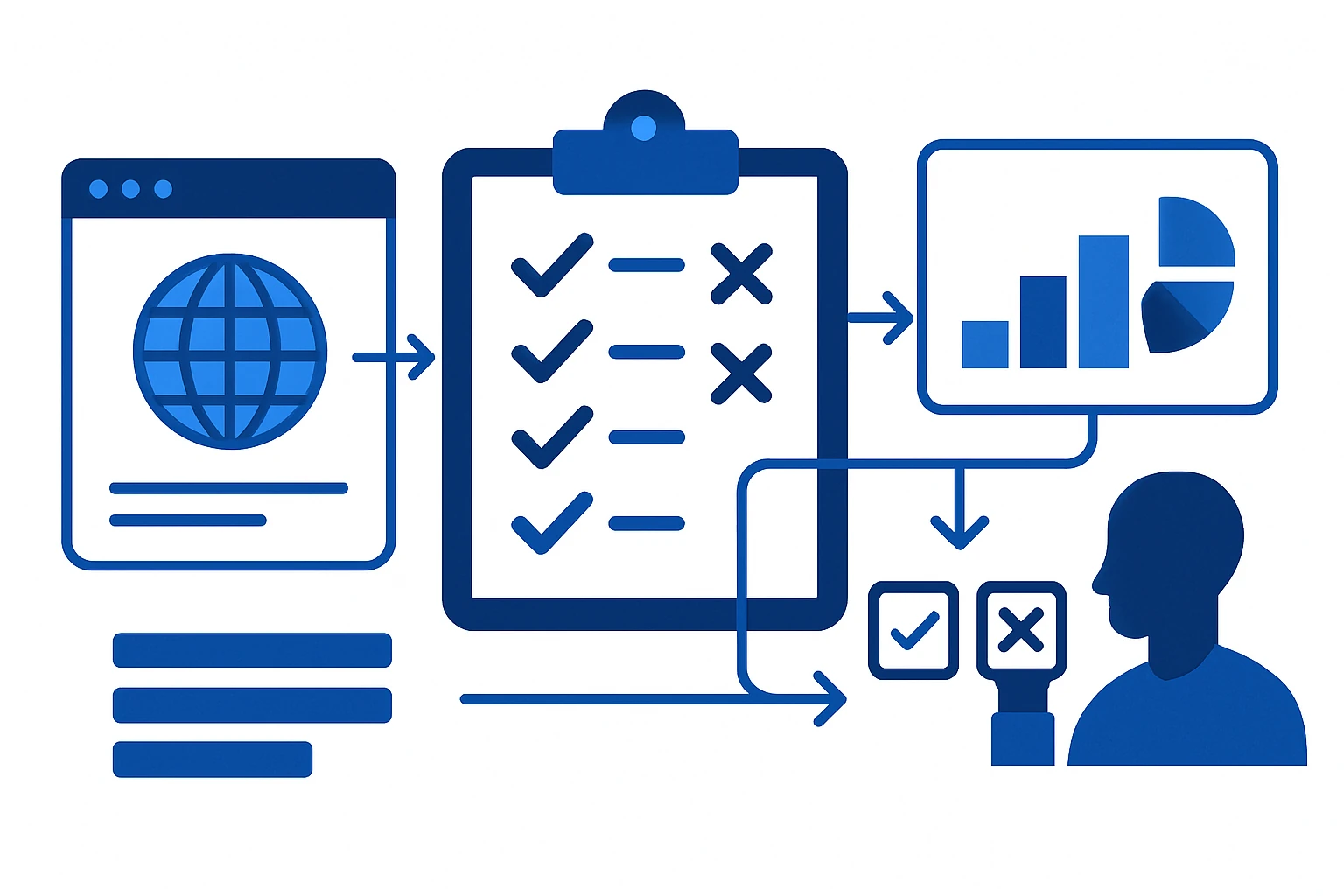
Below is a practical, repeatable framework you can apply to assemble and maintain a live-domain catalog that supports a structured WMS evaluation. The goal is to surface a clean, auditable trail from your warehouse requirements to concrete vendor domains and third-party signals.
- Define evaluation criteria: Start with your warehouse realities - sku complexity, order profiles, automation level, and growth plans. Distinguish core WMS functionality from extended capabilities such as labor management, slotting, yard management, and cross-docking. This aligns with MQ’s emphasis on core WMS vs extended WMS capabilities and the need for a coherent architecture. Magic Quadrant for Warehouse Management Systems (Oracle MQ reference) and the SAP EWM overview provide concrete examples of the breadth required at scale.
- Compile a live list of vendor domains: Assemble a list of domains representing the official product pages, deployment options, pricing resources, and partner information for each candidate WMS. The emphasis is on live domains - domains that are actively maintained and reflect current product states and pricing models.
- Validate with external signals: Cross-check the domains against credible external signals such as MQ analyses, independent reviews, and vendor case studies. This helps mitigate the risk of relying on outdated or biased information. For example, Gartner MQ discussions identify leaders and their forward-looking roadmaps, which should be reflected in the vendor-domain content you collect. SAP EWM and Oracle WMS Cloud are useful anchors in this validation process.
- Map capabilities to domains: Create a capabilities matrix that links each domain to a defined set of requirements (e.g., inbound/outbound, wave planning, cross-docking, labor management). This helps you see gaps and overlaps at a glance and supports a structured, apples-to-apples comparison.
- Structure the artifact for decision teams: Package the catalog with a short executive summary, a vendor-domain list, a capabilities map, and a link to supporting sources. Include a simple, repeatable scoring rubric to quantify suitability.
Structured block: Vendor Domain Catalog Framework (quick reference)
| Step | What to Do | Key Data to Collect | Example Sources |
|---|---|---|---|
| 1 | Define criteria | Business size, automation level, cloud vs on-prem, required extensions | SAP EWM page, Oracle WMS Cloud brief |
| 2 | Assemble domains | Vendor domain, product version, deployment model, pricing notes | Vendor home pages, product pages |
| 3 | Validate with signals | MQ positioning, analyst notes, third-party reviews | Solutions Review MQ summary, Gartner MQ references |
| 4 | Map capabilities | Core vs extended WMS, integration points, domain capabilities | SAP EWM, Oracle WMS Cloud pages |
Two canonical WMS references in today’s landscape: SAP EWM and Oracle WMS Cloud
For readers aiming to anchor the catalog against real-world capabilities, SAP EWM and Oracle WMS Cloud offer useful benchmarks. SAP describes EWM as a modern, flexible WMS designed for high-volume operations with deep integration to other SAP components and strong visibility into processes. This is useful when you map domains to enterprise ecosystems and ERP alignment. SAP EWM emphasizes reducing inventory and labor costs while increasing transparency and space utilization.
Oracle frames WMS Cloud as a cloud-native, scalable solution focused on multi-channel fulfillment, improved visibility, and safe data architecture, all with the aim of reducing total cost of ownership in a modern fulfillment network. Oracle WMS Cloud highlights features such as inbound/outbound execution, yard management, cross-dock, and analytics dashboards.
Industry analyses, including Gartner MQ syntheses discussed in outlets like Solutions Review, corroborate that leading vendors are distinguished not only by core WMS competency but by their broader platform strategies and roadmaps for extended WMS capabilities and multi-cloud, multi-tenant architectures. Key takeaways from the 2024 MQ summarize this shift.
ROI and practical decision support: weaving ROI thinking into the catalog
ROI considerations matter early and often in WMS selection. ROI calculators and quantification templates help translate capability into financial value, a topic that appears across WMS vendor resources. For example, several vendors and analysts publish ROI-oriented content to help teams quantify efficiency gains, labor savings, and inventory improvements. A concrete starting point is to use a simple WMS ROI calculation framework that covers potential cost savings from reduced picking time, labor optimization, improved inventory accuracy, and faster order cycle times. WMS ROI calculator (Excel template) from Logiwa illustrates the practical structure of such calculations.
Another example is ROI tooling referenced by cloud-WMS providers that discuss how automation and data-driven decision support drive payback horizons. ROI-oriented resources from modern WMS vendors and ROI calculators cited in industry guides can help you populate the data layer of your vendor-domain catalog. Logistics ROI Calculator (ROI resources) from OmniWTMS demonstrates how ROI reasoning is commonly packaged for buyers in this space.
In practice, the catalog should include a simple correlation: for each vendor domain, note an estimate of payback period or ROI drivers that are particularly relevant to your operation (e.g., multi-channel fulfillment speed, yard visibility, or wave-picking efficiency). This makes the domain list not just a directory but a decision-support tool in its own right.
Limitations and common mistakes: what to watch out for
- Overreliance on peak MQ standings without context: Gartner MQ captures market momentum and feature breadth, but implementation context matters. An MQ Leader may excel in one vertical or region but struggle in another due to integration, localization, or cost. The MQ’s emphasis on extended WMS capabilities and evolving architecture is a reminder to triangulate with your own field data.
- Treating vendor pages as the sole source of truth: Vendor pages are curated marketing assets. The live-domain catalog should be reinforced with independent reviews, customer stories, and analyst commentary (e.g., MQ summaries).
- Not updating the catalog promptly: A live-domain catalog is only useful if it stays current. Cloud-based WMS vendors frequently update pricing, features, and deployment options, so periodic refreshes are essential.
- Ignoring architectural fit: The MQ frame emphasizes architecture and coherence of vision. A vendor with strong core WMS features but a misaligned technical trajectory can be a poor long-term fit, especially for complex warehouses or multi-site deployments.
For a broader sense of the landscape, recent MQ-context discussions highlight a market moving toward cloud-native, scalable architectures and a broader set of capabilities that go beyond traditional WMS. This is a useful caution when populating the test cases in your domain catalog.
Putting it all together: applying the framework in a real-world workflow
Suppose your distribution center handles high SKU complexity, multi-channel fulfillment, and occasional cross-docking. Your vendor-domain catalog would include domains for SAP EWM, Oracle WMS Cloud, and a few other candidates. You would map core capabilities (inbound, put-away, picking, packing, shipping) and extended capabilities (labor management, wave planning, yard management, cross-docking) to each domain. You would then cross-check these mappings with MQ signals and independent reviews to identify any gaps and confirm alignment with your operational strategy. Finally, you would attach a rough ROI forecast to each domain based on your warehouse metrics, such as average pick rate, labor costs, and inventory carrying costs. This process turns a portfolio of domains into a decision-support tool you can share with stakeholders across IT, operations, and finance.
Conclusion: a disciplined approach to WMS decision-making aligned with a live-domain catalog
In the end, the goal is to replace guesswork with structured, auditable, and up-to-date information. A live-domain catalog gives teams a repeatable mechanism to gather, validate, and compare vendor domains against concrete warehouse requirements, market signals, and ROI expectations. The WMS landscape continues to evolve - cloud-first platforms, extended WMS capabilities, and architecture-led vendor strategies are now central to evaluation. SAP EWM and Oracle WMS Cloud exemplify two paths in this landscape: deep enterprise integration and cloud-native, multi-channel fulfillment respectively. By anchoring your process to live domains, you create a durable, decision-ready artifact that travels with your project from RFP to rollout - and beyond.
For teams seeking a practical data backbone to support this work, consider pairing the domain catalog with a trusted data source such as a WebAtla-style repository that tracks live domains and associated operational signals. For additional domain data or verification, you can also consult the RDAP &, WHOIS database to confirm domain status and ownership details.