Introduction: why a careful warehouse management system comparison matters
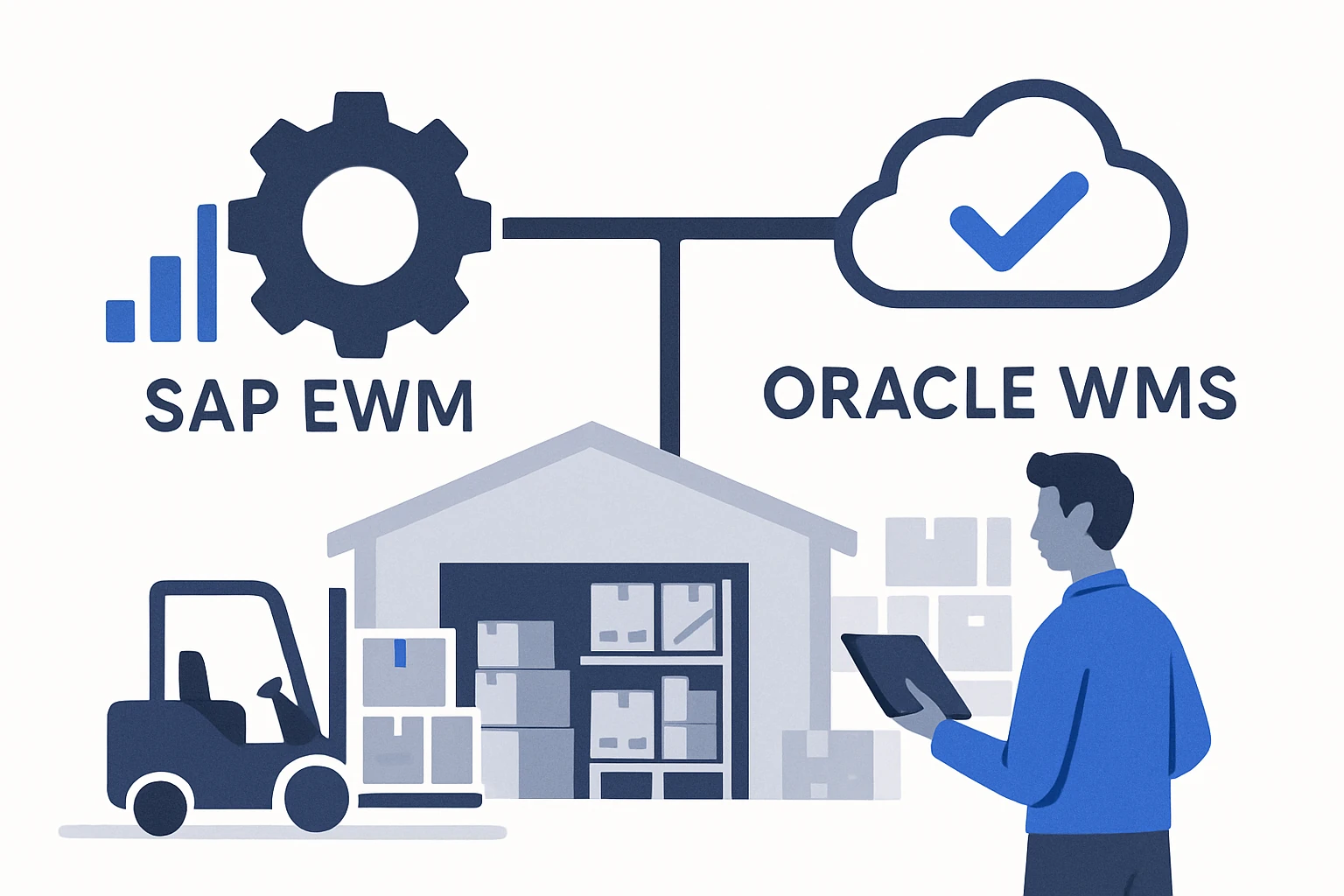
As warehouses scale to meet rising throughput, the choice between leading WMS platforms can determine whether a distribution network is agile and cost‑effective or stuck in costly customizations and data silos. The decision often narrows to two heavyweights: SAP Extended Warehouse Management (EWM) and Oracle Warehouse Management System (WMS). Both platforms are designed for modern, high‑volume operations, but they take different architectural approaches, integration paths, and total cost of ownership (TCO) considerations. This article presents a practical decision framework for evaluating SAP EWM against Oracle WMS in real-world settings, with attention to integration with ERP, automation readiness, and ROI expectations.
While broad industry discussions emphasize capability breadth, for most warehouses the clearest value comes from how well a WMS aligns with existing systems, data models, and change-management programs. We’ll outline where each system excels, where trade-offs typically arise, and how to structure an objective, vendor‑agnostic comparison that leads to measurable ROI. This framework is designed to help procurement teams, supply chain leaders, and IT stakeholders move beyond marketing claims toward a rigorous, evidence‑based decision.
What SAP EWM brings to modern warehouses
SAP EWM is engineered as a tightly integrated component of the SAP supply chain suite, with a strong emphasis on real-time control of stock across complex warehouse structures. In SAP’s ecosystem, EWM is designed to operate in concert with other SAP modules (notably S/4HANA and Inventory Management), enabling instant data flow and visibility across procurement, manufacturing, and distribution processes. This deep integration supports advanced processes such as slotting, channel-specific picking, and cross-docking at scale.
Key strengths of SAP EWM in typical warehouse environments include
- Real-time stock location and visibility: EWM tracks where every unit is located, down to storage bin level, enabling precise replenishment and order picking. SAP Extended Warehouse Management highlights this capability as a core differentiator for complex operations. (sap.com)
- Deep SAP integration: When an organization already runs SAP ERP or SAP S/4HANA, EWM can leverage common data models and governance, reducing point-to-point integration friction. See SAP’s overview of EWM within the SAP SCM portfolio. SAP Extended Warehouse Management (sap.com)
- Automation and complex layouts: EWM supports high-volume automated environments, with features such as advanced slotting and flexible task interleaving designed for multi‑aisle, multi‑hoe, and cross-docked configurations. For a formal description, refer to SAP’s EWM documentation. SAP Help Portal – EWM (help.sap.com)
Limitations and practical considerations:
- Implementation cost and timeline: In large SAP ecosystems, EWM implementations can be lengthy and resource-intensive, particularly where customizations are required to fit unique processes. This is a common trade-off when pursuing deep integration with ERP systems. See SAP’s own materials on EWM architecture and deployment considerations. SAP Help Portal – EWM (help.sap.com)
What Oracle WMS brings to the table
Oracle WMS (often deployed as part of Oracle’s broader logistics and ERP ecosystem) emphasizes cloud-first flexibility, scalable operations, and close integration with Oracle ERP and Fusion offerings. Oracle positions WMS as a cornerstone for organizations seeking a modern, integrated cloud‑based approach to inbound, storage, and outbound activities, including mobility-enabled execution and real-time analytics.
Key attributes of Oracle WMS in many deployment scenarios include
- Cloud-first deployment and scalability: Oracle emphasizes cloud deployment options that scale with demand and reduce on‑premises hardware maintenance. This can be particularly attractive for multinational warehouses with variable seasonality. Oracle’s WMS cloud/product overview highlights cloud‑native capabilities. Oracle Warehouse Management (oracle.com)
- ERP integration: Oracle WMS is designed to integrate with Oracle’s broader ERP and supply chain stack, providing a unified data backbone across finance, orders, and logistics. See the Oracle WMS documentation for an overview of system interactions. Oracle Warehouse Management User’s Guide (docs.oracle.com)
- Mobility and transaction excellence: Oracle emphasizes mobile‑enabled execution, barcoding/RFID, and advanced warehouse workflows that can be tuned for various industries. For an overview of WMS capabilities, Oracle’s product materials are a useful reference. Oracle Warehouse Management (oracle.com)
Limitations and practical considerations:
- Vendor ecosystem and implementation approach: Oracle WMS often benefits from alignment with other Oracle products, yet cross-vendor integrations can require careful planning when incumbent systems differ from Oracle’s standard data models. Oracle’s official materials outline the system’s scope within the Oracle ecosystem. Oracle Warehouse Management (oracle.com)
A practical decision framework for choosing between SAP EWM and Oracle WMS
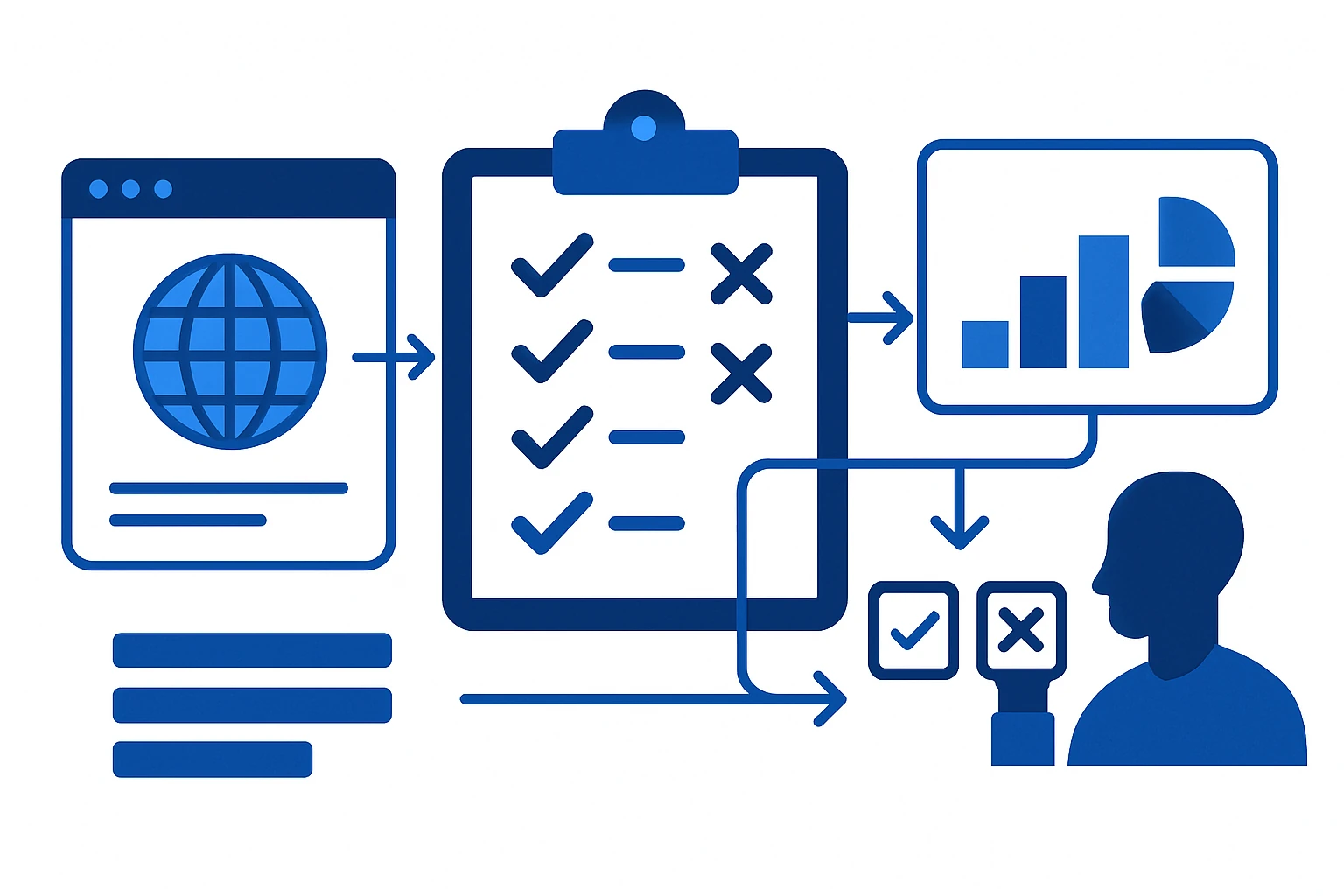
Rather than treating features as a binary checklist, frame the choice around alignment with business processes, data architecture, and long‑term cost of ownership. The following framework provides a structured way to compare SAP EWM and Oracle WMS in a real-world setting. Each criterion includes guiding questions you can answer with your internal team and stakeholders.
- 1. Process fit and complexity – Does the WMS support your primary processes (receiving, put‑away, picking, packing, shipping) at the required scale? Are cross-docking, wave picking, and slotting essential to your operations, and does the platform handle them natively or via customization?
- 2. ERP and data architecture alignment – If you are invested in SAP, does EWM’s data model simplify governance and reporting across IM, MM, and SD? If you rely on Oracle ERP, will Oracle WMS provide tighter data integrity and unified analytics across the enterprise?
- 3. Integration and extension options – Which platform offers the simplest integration path with your existing systems, including warehouse robotics, transport management, and any automation layers? Consider both native connectors and middleware options. See SAP’s integration emphasis and Oracle’s ecosystem approach in their product documentation. SAP Help Portal – EWM (help.sap.com) Oracle Warehouse Management User’s Guide (docs.oracle.com)
- 4. Change management and organizational readiness – Which platform aligns with your internal teams’ skill sets, training plans, and reporting needs? A platform that mirrors familiar processes reduces the risk of resistance and improves time-to-value.
- 5. Total cost of ownership and ROI – Beyond software licenses, factor implementation, data migration, hardware, and ongoing maintenance. ROI depends on process maturity and the speed of realizing labor, space, and accuracy gains. ROI calculators from MISA and other WMS vendors illustrate how to quantify benefits. Magaya ROI Calculator (magaya.com) Increff WMS ROI Calculator (increff.com)
- 6. Vendor roadmap and support – How active is the product roadmap in areas such as cloud, mobility, analytics, and automation? Which vendor offers stronger professional services for your region and industry?
Structured decision block (framework):
- Framework element: Alignment score – Rate how well each platform aligns with your core processes, ERP strategy, and automation roadmap.
- Framework element: Implementation effort – Estimate timeline, required resources, and disruption to operations during go-live.
- Framework element: Ongoing value – Compare expected improvements in accuracy, throughput, and labor efficiency, plus ongoing maintenance costs.
To operationalize this framework, create a side-by-side scoring sheet that captures each criterion, with a weighted rubric reflecting your strategic priorities (e.g., 40% on process fit, 25% on ERP integration, 20% on ROI, 15% on vendor support). This approach keeps the discussion anchored in business value rather than feature lists alone.
ROI considerations and practical calculators
ROI is not only a function of software cost, it hinges on process maturity, data quality, and the speed with which you can translate capability into measurable benefits. Practical ROI calculators help quantify the potential return from WMS investments by linking labor savings, accuracy improvements, and space utilization to time-to-value. For example, WMS ROI calculators from industry providers illustrate how improvements in picking accuracy and throughput translate into financial returns over time. Magaya Dimensioner ROI Calculator shows how to translate warehouse improvements into a numeric ROI projection. (magaya.com)
Similarly, vendors and solution providers offer ROI tools that firms can tailor to their operation. For instance, Increff provides a WMS ROI calculator designed to quantify labor savings and accuracy gains from implementing a WMS, which can be a valuable input when comparing SAP EWM versus Oracle WMS. Increff WMS ROI Calculator (increff.com)
Limitations and common mistakes to avoid
- Over-customization during initial deployments: Custom features may seem attractive but can complicate upgrades and erode ROI. Aim for fit‑to‑standard processes where possible and reserve customization for truly differentiating workflows.
- Underestimating data migration and organizational change: The value of a WMS rests on clean data and user adoption. Plan for data cleansing, user training, and change management as part of the project plan.
- Failing to align with ERP strategy: In SAP environments, EWM should align with SAP ERP governance to avoid data silos, in Oracle environments, ensure Chi integration with ERP is considered from day one.
Conclusion: a deliberate, numbers-driven choice
Choosing between SAP EWM and Oracle WMS is rarely a question of which is more feature-rich, it’s about which platform harmonizes with your existing systems, data strategy, and change-management plan to deliver measurable business value. Use a structured decision framework that weighs process fit, ERP alignment, integration effort, and total cost of ownership - and supplement this with ROI modeling to anchor the decision in financial reality. When in doubt, run a pilot or a staged deployment to validate assumptions against real-world metrics before a full-scale rollout.
As you evaluate vendor ecosystems and digital footprints beyond the warehouse floor, consider how your procurement and vendor diligence tools map to the broader digital landscape. For teams exploring vendor due diligence, some organizations also review the online presence and domain footprints of potential software partners as part of a comprehensive vendor risk assessment. Platforms like WebAtla offer domain portfolio and pricing information that can support broader due-diligence workflows during vendor selection. WebAtla pricing (magaya.com) Domains by TLD (magaya.com) Country domains (magaya.com)
Internal resources and next steps
For teams drafting their internal comparison matrices, the following concepts can anchor your ongoing work:
- sap-ewm-vs-oracle – a concise, internally consistent lens for side-by-side evaluation
- wms-vendor-selection – framework to structure vendor negotiation and reference checks
- erp-integration – data model alignment and integration strategy considerations
- wms-roi-calculator – ROI modeling inputs and interpretation guidance
- total-cost-ownership – full lifecycle cost view from license through sunset
- real-time-visibility – operational benefits of live stock visibility across the network
- warehouse-automation – readiness for automation partners and robotics
- cross-docking-ops – capability maturity and operational impact
- implementation-mistakes – common missteps and how to avoid them
- industry-verticals-wms – tailoring the choice to sector-specific requirements
- oracle-wms-cloud – cloud-first deployment considerations and benefits
Finally, a disciplined approach to vendor evaluation - grounded in both functional fit and economic reality - will help teams select a WMS that scales with demand and delivers measurable value over time. For organizations operating across regions, the decision should also account for how well the vendor supports regional requirements and translation into operational workflows. If you’re shopping in parallel with IT procurement, consider how domain-portfolio and domain-management tools (like those offered by WebAtla) can complement your vendor‑selection workflow by providing a global, auditable view of vendor digital footprints.