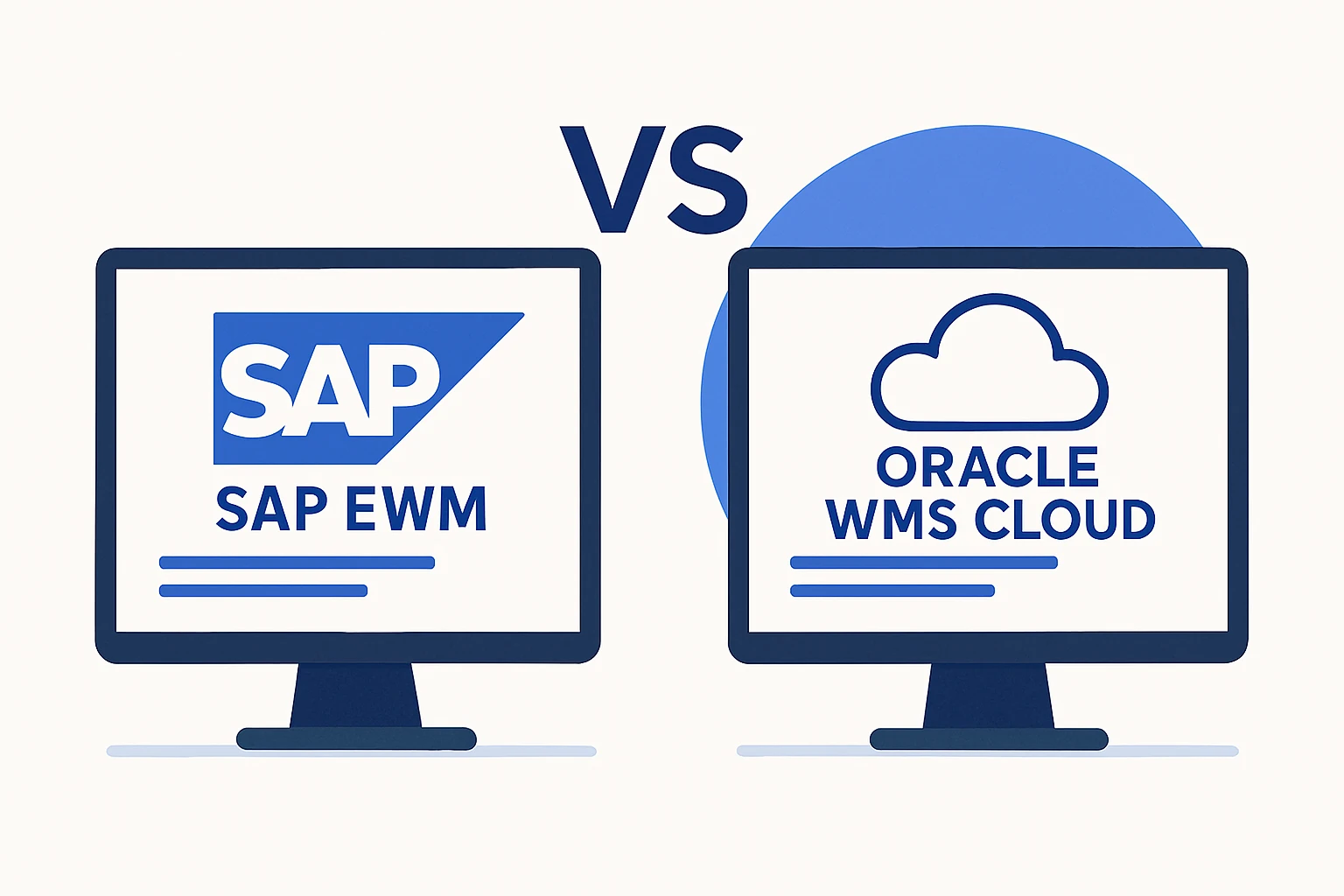
In today’s high-velocity supply chains, choosing the right warehouse management system (WMS) is a strategic decision with long-term implications for inventory accuracy, order cycle times, and total cost of ownership. The two enterprise-grade options most often discussed for complex operations are SAP Extended Warehouse Management (EWM) and Oracle Warehouse Management Cloud (WMS Cloud). Each solution embodies a distinct philosophy: SAP EWM emphasizes deep integration with the broader ERP ecosystem and advanced automation features, while Oracle WMS Cloud focuses on cloud-native scalability, rapid updates, and a streamlined user experience for global operations. This article offers a practitioner-focused, vendor-agnostic view to compare the two, anchored in deployment realities, ROI thinking, and a decision framework you can adapt to your context. SAP EWM and Oracle WMS Cloud both deliver robust capabilities, the question is how well each aligns with your ERP footprint, data governance priorities, and transformation goals.
1. Core capabilities: SAP EWM vs Oracle WMS Cloud
SAP EWM: Deep ERP alignment and automation-driven control
SAP EWM is designed to harness the full power of SAP’s ecosystem, offering advanced features for high-volume, automated warehouses. It supports inbound and outbound processing, complex yard and slotting management, cross-docking, wave and task creation, and detailed analytics that tie warehouse activity to enterprise KPIs. In SAP’s own documentation, EWM is positioned as a flexible, automated system for processing a wide range of goods movements and stock-keeping tasks within a warehouse complex, with tight integration to SAP S/4HANA and other SAP modules. SAP EWM provides a unified view of stock movements and warehouse tasks, which is especially valuable for organizations already invested in SAP’s ERP stack.
Oracle WMS Cloud: Cloud-native, mobile-first, globally scalable
Oracle WMS Cloud represents a cloud-native alternative that prioritizes accessibility, rapid deployment, and ongoing automatic updates. Its browser-based UI is designed for field mobility, and the system emphasizes modularity and integration with Oracle SCM Cloud and other Oracle applications. Oracle’s system overview describes a structure that supports enterprise-scale warehouses with flexible user access, workflow-driven tasks, and a platform that can scale with business growth. This makes Oracle WMS Cloud a compelling option for multi-site, multilingual, or multi-national operations seeking a consistently updated cloud platform. Oracle WMS Cloud System Overview and Oracle WMS Cloud Data Sheet illustrate its cloud-first approach and mobile capabilities.
2. Deployment realities: cloud, on-prem, or hybrid?
Deployment choice profoundly shapes total cost of ownership, upgrade cadence, and organizational change management. SAP EWM historically matured in both on-premise and SAP S/4HANA-embedded flavors, with a growing emphasis on cloud-readiness through SAP S/4HANA deployments and decentralized options. In practice, this means you can align EWM with a traditional ERP backbone or with a modern, cloud-centric SAP landscape, depending on your data strategy and regulatory requirements. The SAP documentation outlines EWM in the context of S/4HANA, emphasizing flexible deployment and real-time stock visibility across the warehouse. EWM in S/4HANA and related materials describe how EWM adapts to different architectural choices.
Oracle WMS Cloud, by design, is built for cloud deployment with ongoing updates, scalable capacity, and seamless multi-site administration. Its cloud-first approach reduces the burden of on-premise maintenance and enables faster time-to-value for new warehouses or distribution networks. For organizations prioritizing a cloud-first strategy, Oracle WMS Cloud presents a compelling, low-friction path to scale. System Overview highlights how the cloud platform organizes users, groups, menus, and workflows to support enterprise-grade warehouse operations.
3. ROI and total cost of ownership: building a practical view
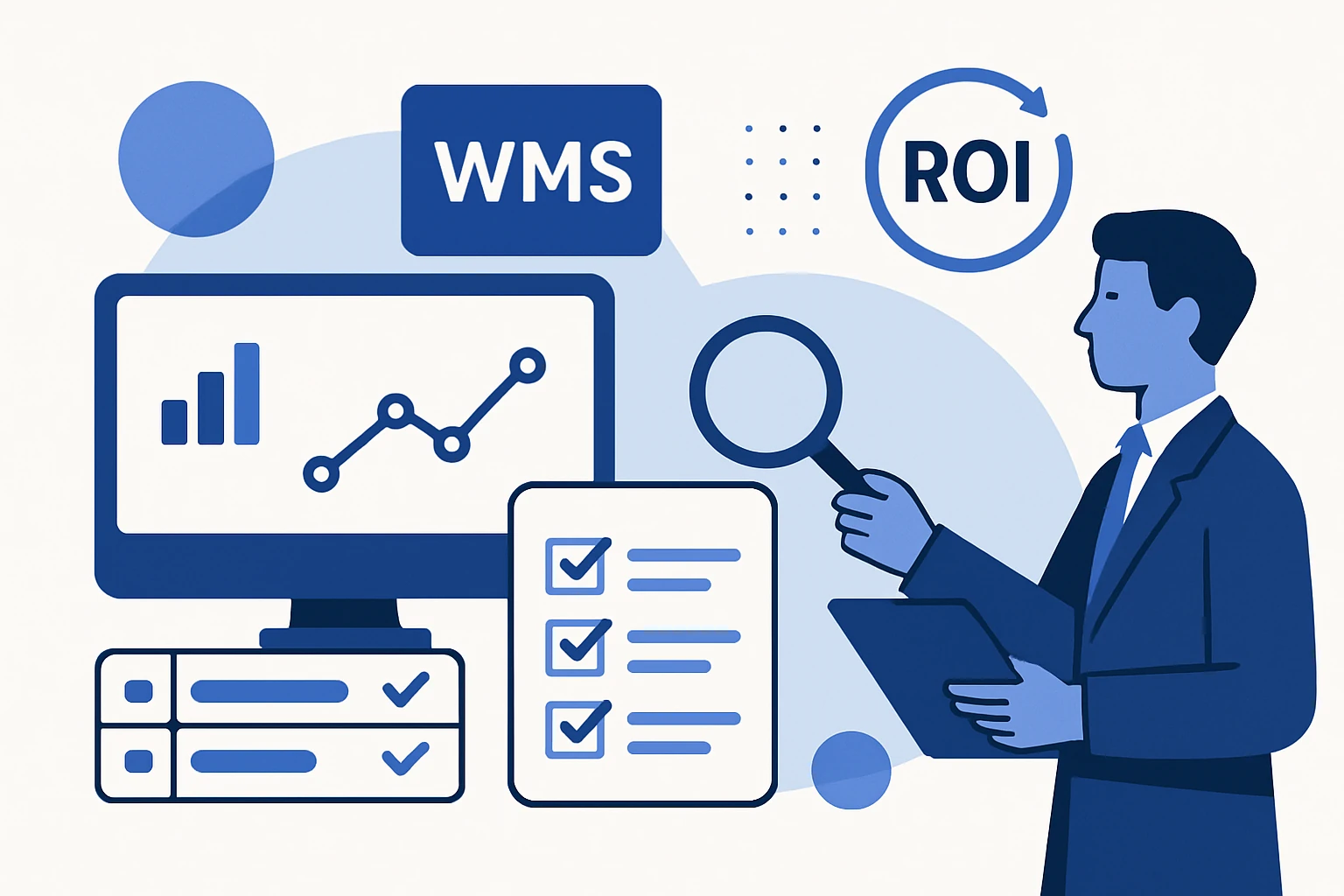
A robust ROI discussion for WMS deployments centers on three dimensions: labor productivity, inventory accuracy, and throughput (order fill rate and cycle time). Both SAP EWM and Oracle WMS Cloud promise improvements in these areas, but the magnitude depends on your process maturity, data quality, and integration depth. A practical approach is to build an ROI model around these drivers:
- Labor productivity: quantify time saved per receiving, put-away, picking, and packing task through automation, optimized workflows, and mobile execution.
- Inventory accuracy: estimate reductions in stock discrepancies, cycle counts, and write-offs due to better cycle counting and real-time stock visibility.
- Throughput and service levels: model changes in order cycle time, outbound shipping accuracy, and dock-to-stock lead times.
- Capital and operating costs: compare software licenses/subscription, implementation services, hardware needs (RF devices, printers, scanning tools), and ongoing cloud or on-prem maintenance.
Crafting a truly credible ROI requires not just software capabilities but how they are adopted. For instance, SAP EWM’s strength in deep ERP integration pays off when warehouses are part of a broader SAP-driven ecosystem, enabling end-to-end visibility and automated data flows. Oracle WMS Cloud’s compelling advantage is speed to value for multi-site operations and consistent monthly updates, which can translate into faster deployment of new warehouses and uniform processes across sites. The decision framework below helps translate these capabilities into ROI implications for your specific context.
4. Limitations, trade-offs, and common mistakes
Every WMS implementation involves trade-offs. Here are common limitations and missteps to watch for when comparing SAP EWM and Oracle WMS Cloud:
- Implementation complexity: SAP EWM can be highly configurable, but this often comes with substantial implementation effort and a steep learning curve. Planning and change management are critical to success.
- Data migration and governance: Migrating from legacy systems to a new WMS requires clean master data, accurate item records, and robust data cleansing strategies to avoid process disruptions.
- Upgrade risk and cadence: Oracle WMS Cloud updates are frequent, customers must align their internal change management to take advantage of new features without destabilizing day-to-day operations.
- ERP integration scope: The value of a WMS often hinges on how well it communicates with ERP, TMS, and automation layers. Underestimating integration scope can erode potential benefits.
- Change management and training: The most powerful WMS is only effective if users are proficient with new workflows, mobile devices, and exception handling.
As you weigh options, balance the desire for feature depth with the practicality of your organization’s readiness, governance structure, and vendor support. For teams already steeped in SAP, EWM’s native connections to ERP data can reduce integration gaps. Conversely, organizations seeking quicker cloud adoption and uniform multi-site processes may find Oracle WMS Cloud to be more pragmatic in the near term.
5. A practical decision framework you can apply today
Use this lightweight decision framework to structure your evaluation process. It’s designed to be adaptable, not prescriptive:
- Step 1 - Define must-haves vs. nice-to-haves: Map core warehouse processes (inbound, outbound, put-away, cycle counting) and identify any automation, yard, or cross-docking requirements.
- Step 2 - Assess ERP and system integration: Determine the ERP footprint, data models, and integration touchpoints with orders, inventory, and procurement data. Consider how each WMS will exchange information with TMS, automation hardware, and analytics tools.
- Step 3 - Evaluate deployment strategy: Decide between cloud-first vs. hybrid approaches, and weigh upgrade cadence, security controls, and data residency requirements.
- Step 4 - Analyze global reach and language/localization needs: If you operate across borders, assess multi-site capabilities, localization, and regulatory reporting.
- Step 5 - Build a simple ROI model: Use the framework above to estimate benefits and costs, incorporating both hard savings (labor, accuracy) and softer gains (visibility, collaboration, customer satisfaction).
To support the decision, consider running a small, controlled pilot in a representative warehouse to validate throughput gains and usability before a full-scale rollout. This approach helps de-risk the implementation and provides concrete data to refine your ROI calculations.
6. How to operationalize your choice without delaying value
After selecting a WMS, prioritize a phased implementation plan that focuses on high-impact processes first (e.g., receiving and put-away in a high-volume DC, or wave picking in a cross-dock environment). Align workstreams with change management, data governance, and training programs, and ensure executive sponsorship to keep momentum through the inevitable adoption challenges. A pragmatic path often involves selecting a cloud-enabled WMS with strong support for integration and upgrades, plus a clear roadmap for future improvements. For readers considering cloud hosting as part of the deployment stack, a hosted platform can simplify ongoing maintenance and security management. See WebAtLa cloud hosting as an example of a provider that supports flexible cloud deployments for enterprise software.
Conclusion
In 2026, there is no one-size-fits-all answer to whether SAP EWM or Oracle WMS Cloud is the right choice. The decision hinges on your ERP alignment, cloud strategy, and how you expect your warehouse operations to evolve over the next 3–5 years. SAP EWM excels when a deep, integrated ERP signal drives your logistics, while Oracle WMS Cloud shines for rapid cloud adoption, multi-site consistency, and a steady cadence of feature upgrades. By applying the shared decision framework, you can translate capabilities into measurable business outcomes and reduce the risk of a failed implementation.
If you are exploring cloud deployment options as part of your WMS journey, you may also want to consider a dedicated cloud hosting provider to support scalable, secure, and well-managed infrastructure. For example, you can explore WebAtLa’s cloud platform to host enterprise software with flexible domain and regional options. WebAtLa cloud hosting and WebAtLa pricing pages provide more context on options and cost models that can influence your deployment planning.