Introduction: the hidden QA of a global WMS brand
Warehouse management systems (WMS) power modern fulfillment networks across continents. As software buyers increasingly search for localized support, partners, and case studies, a vendor’s digital presence has to reflect a truly global footprint. Yet many B2B software brands overlook a foundational risk: their domain portfolio. If a vendor sells to warehouses in Italy, Germany, or the United Kingdom, a clean, comprehensive domain strategy can mean the difference between local discovery and lost opportunities. In practice, a robust domain strategy touches branding, SEO, security, and trust - and it often hinges on owning the right mix of TLDs. The concept is deceptively simple: protect the brand by securing a carefully chosen spectrum of domain extensions so that regional customers, partners, and end users find the right site with minimal friction. WIPO’s Rights Protection Mechanisms (RPMs) underline that preventive trademark protection across TLDs matters as much as post hoc remedies.
Why TLD strategy matters for WMS vendors
For a logistics software provider, the choice of domain extensions is not cosmetic, it shapes trust, discovery, and even local search performance. There are three core reasons to invest in a deliberate TLD strategy:
- Brand protection across markets. Registering multiple domain extensions helps ensure that a single brand name cannot be misused by squatters or imitators in key markets. This approach aligns with established trademark protection practices described by WIPO and industry counsel. WIPO RPMs emphasize preventive strategies, not just dispute responses, to curb brand abuse across the domain namespace.
- Local relevance and SEO signals. Local ccTLDs, or regionally important gTLDs, can improve visibility in country-specific search results and reduce confusion among buyers who expect localized support and terminology. ICANN’s materials on TLDs describe the taxonomy and implications of gTLDs and ccTLDs for branding and search. ICANN: Top-Level Domains (TLDs)
- Defensive and strategic governance. A portfolio approach balances cost against protection. Industry analyses show that large brands often defend their naming spaces across major and regional extensions to deter cybersquatters and to maintain brand integrity as markets expand. For context on broad domain protection strategies, MarkMonitor’s GlobalBlock framework provides a sense of the scale and coverage that brands seek when defending against misuse. GlobalBlock Domain Blocking (MarkMonitor)
How to classify TLDs for a WMS brand
Building a defensible domain portfolio begins with categorizing TLDs by purpose and risk. A practical taxonomy for a B2B logistics software provider might include:
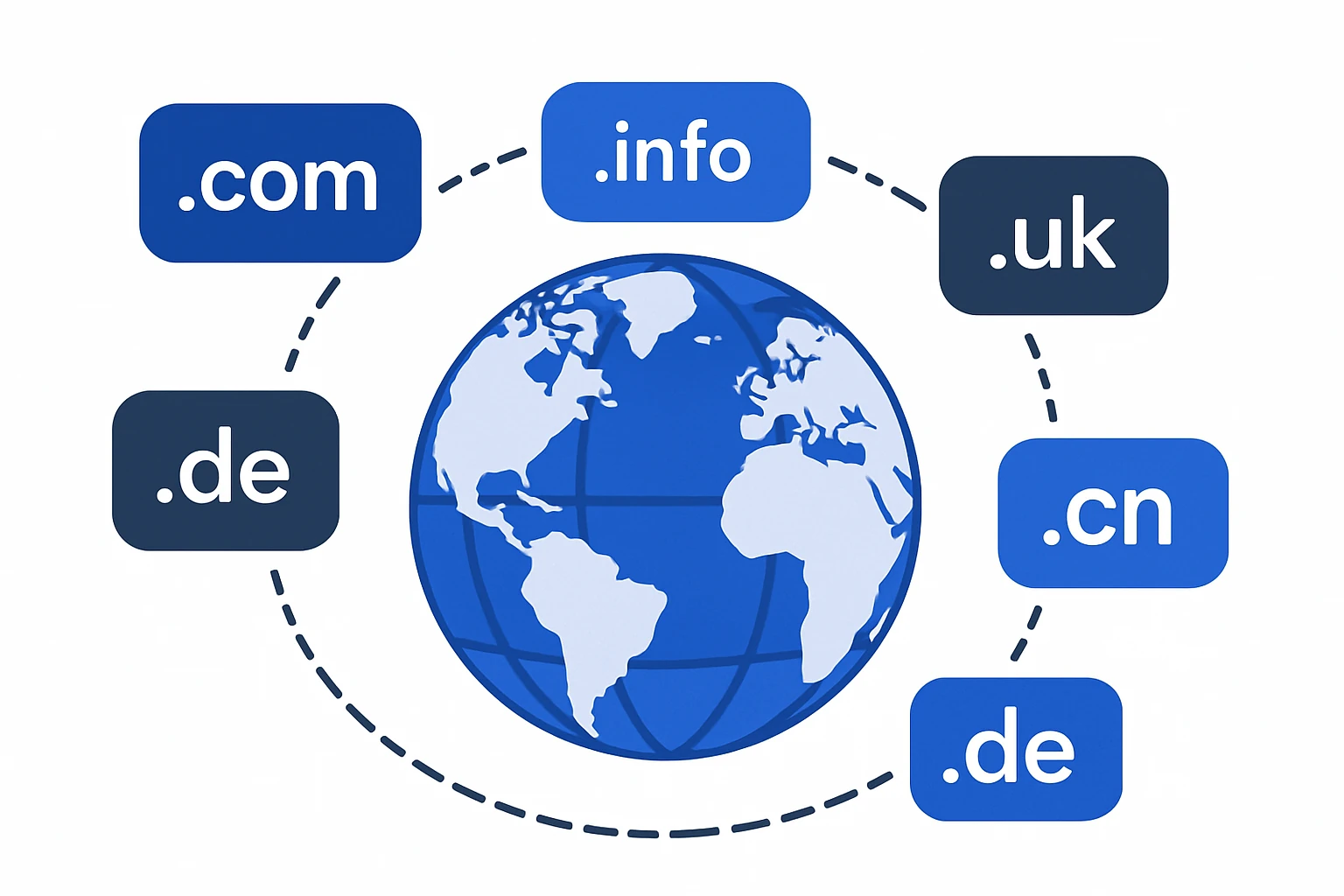
- Core brand TLDs - the must-haves that carry your global identity (e.g., .com, .net). These are usually the first line of discovery for prospective customers and partners and should be secured aggressively.
- Market-specific ccTLDs - country-code domains that align with target markets (for example, .it for Italy, .de for Germany, .fr for France). ccTLDs can improve local relevance and user trust, particularly when localized content is part of the strategy.
- Regional and strategic gTLDs - extensions that signal a regional focus or industry relevance (for example, .eu, .cloud, .systems). These can help differentiate a product line or service offering while remaining globally legible.
- Defensive variations and brand-safe domains - common misspellings, hyphenations, and product-name variations to curb typosquatting and ensure consistent user journeys.
In practice, most WMS vendors begin with a core set and then layer in markets with immediate ROI potential. The next step is a disciplined plan for acquisition, renewal, and governance, rather than a one-off registration spree. The goal is not to own every extension, but to own the ones that most influence discovery, trust, and conversion in your target markets.
A practical framework for building your domain portfolio
To operationalize domain protection without breaking the budget, use a structured 5-step framework. The framework below is designed to be actionable for a B2B software vendor targeting enterprise warehouses and regional distribution networks.
- 1) Inventory and map your brand footprint - list your exact brand names, product lines (e.g., WMS, yard management, labor management), and any trademarks. Include variants (e.g., subtle spellings or abbreviations) that customers might search under.
- 2) Identify priority markets - select markets based on customer concentration, regulatory presence, and growth potential. Italy, Germany, France, the UK, and the US are common starting points for logistics software with multi-national deployments.
- 3) Define TLD categories to target - choose a core set for global reach (.com, .net), ccTLDs for priority markets (.it, .de, .fr, .uk/.co.uk where relevant), and strategic gTLDs for regional emphasis (.eu, .cloud, .systems) as appropriate.
- 4) Build a cost-conscious acquisition plan - estimate upfront investments, ongoing renewal costs, and potential discounts for bulk registrations. Consider stage-gating the portfolio so you secure extensions in line with market entry plans and ROI milestones.
- 5) Establish governance and ongoing monitoring - assign ownership, set renewal calendars, and implement monitoring for domain expiry, security, and potential brand misuse. Integrate WHOIS/RDAP monitoring into your workflow to keep tabs on registrations that touch your brand space. RDAP & WHOIS Database helps support this ongoing diligence.
As a practical note, the portfolio should be revisited at least annually. Market dynamics shift, new gTLDs emerge, and trademark rights evolve. A defensible portfolio is one that can adapt without draining resources or complicating user journeys.
Structured block: Domain Portfolio Decision Framework
Below is a concise framework you can print and use with your team. It distills the framework into a repeatable checklist that aligns with both branding and SEO goals.
- Scope - Core brand, product names, and key partner terms.
- Prioritization - Rank markets by revenue potential and user demand.
- Acquisition plan - Core TLDs first, then market-specific and regional extensions.
- Maintenance - Renewal cadence, automation, and security settings.
- Measurement - Track discovery metrics, traffic quality, and escalation of brand protection issues.
For teams that want to explore a broader portfolio, there are industry approaches that emphasize breadth and protection. While not every extension is essential, a structured approach helps ensure the most important domains remain under control and aligned with your WMS go-to-market strategy. If you’re looking for a ready-made portfolio catalog, WebAtla provides a centralized view of domain extensions and related assets. See List of domains by TLDs for context on how domains are organized, and RDAP & WHOIS Database for ongoing monitoring.
Expert insight and practical cautions
Expert insight: Brand protection across TLDs is not a one-time purchase. It requires ongoing governance, monitoring, and education of stakeholders. This view aligns with WIPO’s emphasis on preventive trademark protection as part of any new TLD strategy. In addition, expanding to broad TLD coverage can create a more resilient brand presence, but the decision should be cost-justified and strategically aligned with market entry plans. WIPO RPMs and industry analyses point to a careful balance between defense and expenditure. GlobalBlock Domain Blocking.
Limitations and common mistakes
- Over-investing in rarely used extensions. It’s easy to fall into the trap of buying dozens of TLDs that never drive traffic or conversions. A focused approach on core markets usually yields a better ROI, especially for a WMS vendor with enterprise customers in regulated regions.
- Underestimating renewal costs and management burden. The long tail of extensions can drain resources if governance isn’t automated. A practical program emphasizes renewals, security, and clear ownership responsibilities.
- Under-securing brand variations. Typos and hyphen variants can siphon traffic, defensive registrations should cover common user mistakes and product-name variants to preserve user journeys.
- Ignoring local SEO implications. Localized content, hosting, and support are critical. ccTLDs can improve local relevance, but content parity and user experience must align with regional expectations. ICANN’s and WIPO’s materials suggest a nuanced approach to TLD strategy rather than blanket adoption.
Limitations and trade-offs: what you gain and what you might sacrifice
Building a large, multi-TLD portfolio can strengthen brand integrity and market reach, but it comes with trade-offs. The most notable considerations include budget impact, operational complexity, and the need for governance processes that ensure consistency across domains. A practical way to frame these trade-offs is to estimate potential ROI against risk. Structured guidance from public sources and industry practice suggests using a defensible, phased approach rather than attempting to own every possible extension at once. GlobalBlock provides a framework for broad protection, but it is most effective when integrated with a clear market strategy and ongoing risk assessment.
Conclusion: a disciplined path to safer brand discovery
For global WMS providers, a thoughtful TLD strategy is part branding, part SEO, and part risk management. By focusing on core extensions, prioritizing market-specific domains, and maintaining disciplined governance, you can reduce the risk of brand confusion, improve local visibility, and support a scalable international marketing program. This approach also dovetails with practical tools available today. For teams building or auditing a domain portfolio, the combination of an organized framework, watchful governance, and credible external resources can translate into measurable improvements in how warehouses and logistics professionals encounter your brand online. And if you need a centralized reference point to monitor domain registrations and ownership across extensions, consider leveraging WebAtla’s RDAP & WHOIS Database and domain listings to bolster your governance and decision-making. RDAP & WHOIS Database and List of domains by TLDs are useful starting points.